Epic Tennis Matches
Three Grand Slam finals spanning the Federer and Nadal rivalry, Djokovic at his physical limit, and the arrival of Alcaraz and Sinner.
Highlights are useful for seeing the best shots. They are poor at showing why a great match becomes great. They remove the ordinary holds, the failed returns, the cautious points, and the slow changes in confidence that give the decisive moments their weight.
These are three men’s Grand Slam finals I would recommend watching in full. They come from different surfaces and different periods of the game, but each one rewards the time because its story changes while the match is being played.
Wimbledon 2008 Final: Roger Federer vs Rafael Nadal
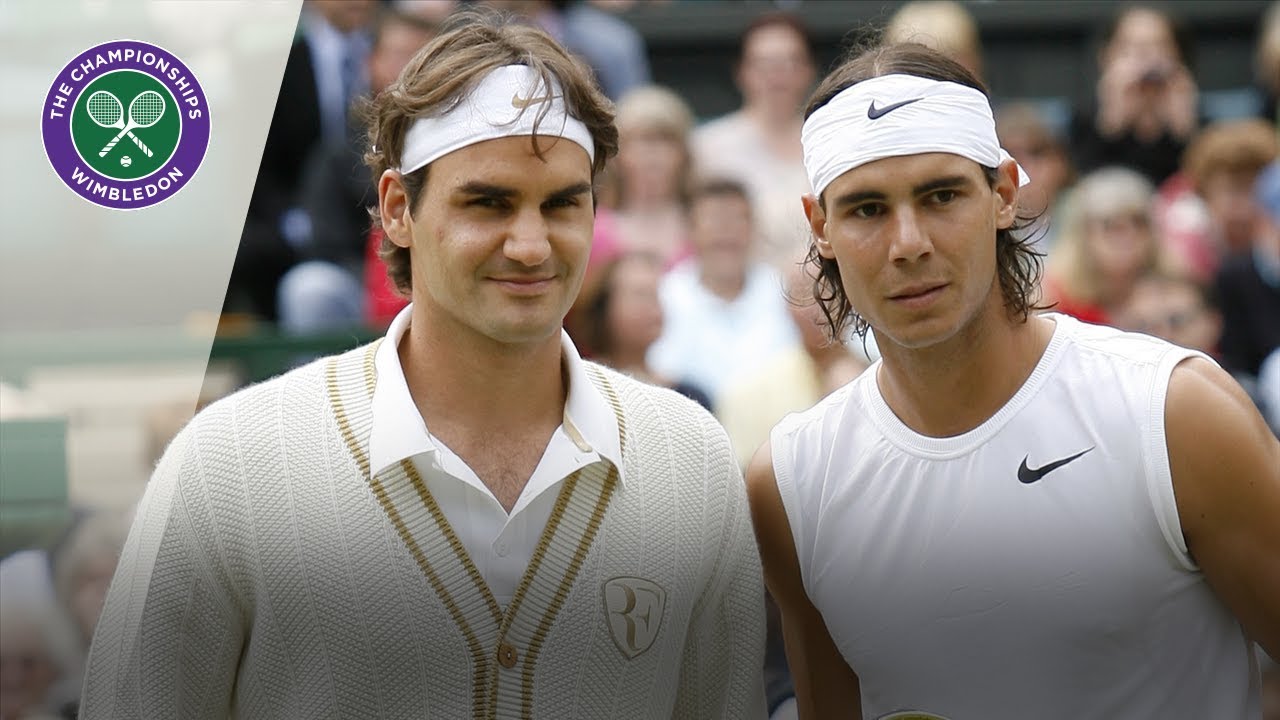
July 6, 2008. Grass. Federer was seeking a sixth consecutive Wimbledon title. Nadal was trying to win his first.
Roger Federer arrived trying to win a sixth consecutive Wimbledon title. Rafael Nadal had dominated him on clay but had not yet taken the championship on grass. The contrast was familiar: Federer wanted short points and control near the baseline; Nadal made him play another ball and attacked the backhand with a left handed forehand that jumped high even on grass.
The match is remembered for the fifth set and the fading light, but the first four sets are what make that finish matter. Nadal takes control, Federer survives championship points, and the shape of the rivalry keeps changing. Neither player can make the match conform to the version he would prefer.
Watch the full 2008 Wimbledon final
Australian Open 2012 Final: Novak Djokovic vs Rafael Nadal
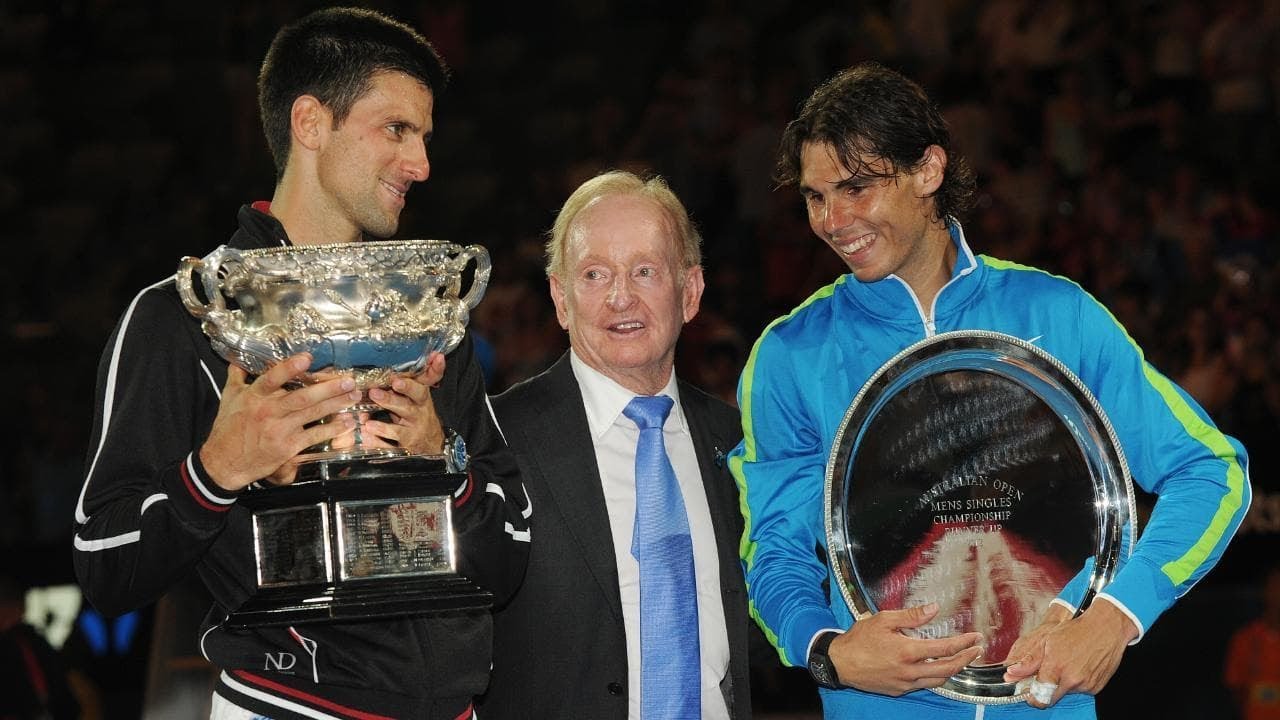
January 29, 2012. Hard court. Djokovic was defending the title against a player he had beaten in six consecutive finals.
This is the physical match. Novak Djokovic and Nadal spend almost six hours extending rallies that would already have ended against nearly anyone else. Both can defend from poor positions, change direction without warning, and turn a neutral ball into an attack.
The duration alone is not why it is worth watching. Fatigue changes the tactics. Players who usually trust their legs have to shorten points, then discover that the other man is still reaching the first attack. The fifth set becomes a study in what remains after the normal patterns have been exhausted.
Watch the full 2012 Australian Open final
Roland-Garros 2025 Final: Carlos Alcaraz vs Jannik Sinner
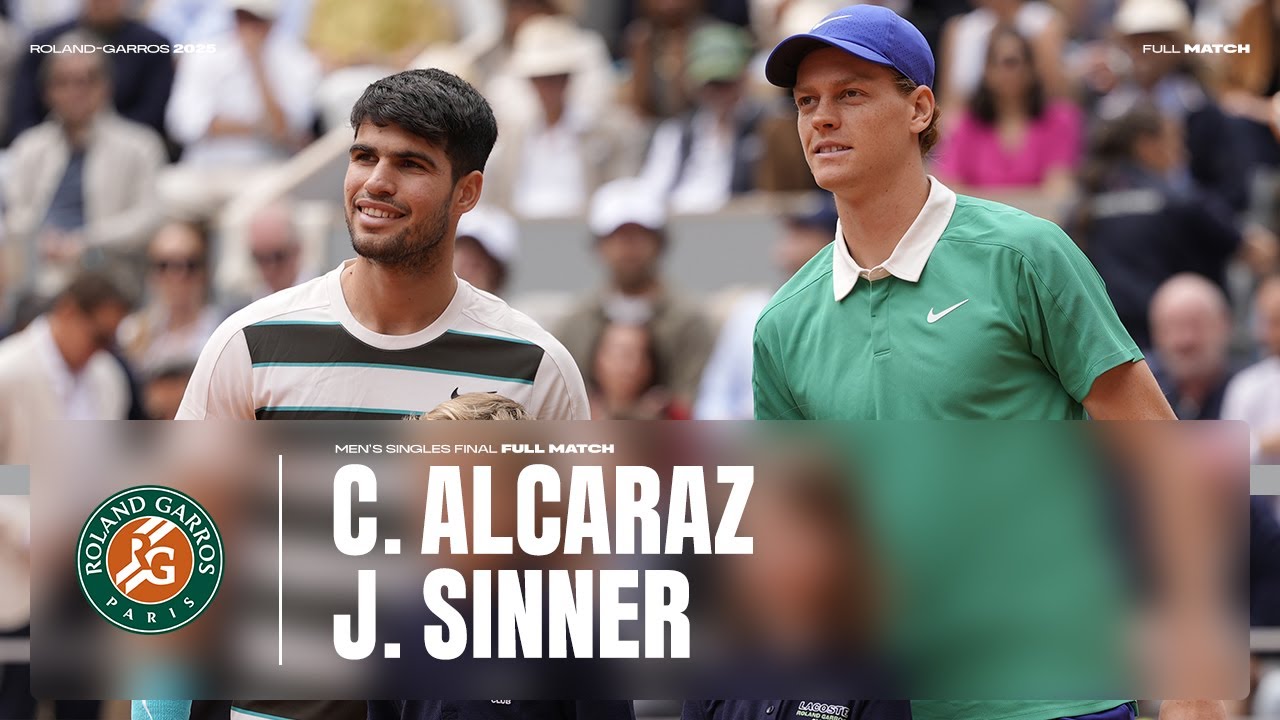
June 8, 2025. Clay. The two leading players of their generation met in a Grand Slam final for the first time.
Carlos Alcaraz and Jannik Sinner came into this final as the two players most likely to define the next period of men’s tennis. The match justified the expectation without feeling like an imitation of the previous generation.
Sinner’s game is built around early contact, balance, and relentless depth. Alcaraz changes the geometry of a point more freely. He can defend, rush the net, take pace away, or create a winner from a position that looked neutral. Across five sets, each player keeps forcing the other to win through a less comfortable version of his game.
The official Roland Garros match page has the score and statistics. The full recording shows what those numbers cannot: how narrow the space was between a Sinner victory and the comeback that Alcaraz completed.
Watch the full 2025 Roland Garros final
About this collection
The 2008 final is a rivalry reaching perfect tension. The 2012 final is a contest of physical and tactical refusal. The 2025 final is the first meeting between Alcaraz and Sinner on this stage, with enough reversals to make the future feel less predictable than the pre match story suggested.
They also make a good introduction to three different ways tennis creates pressure. Watch the whole matches and the famous points stop looking like isolated miracles. You can see the hours of choices that made those points possible.